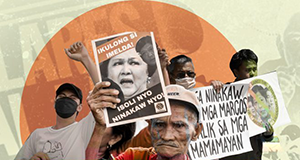
On June 2, 2026, the Sandiganbayan (Philippines' anti-graft court) dismissed the remaining asset claims case in the long-running forfeiture case (Civil Case No. 0141) against the Marcos family.
The court did not declare the Marcoses innocent. It dismissed the case due to a mix of procedural surrender by state prosecutors and extreme delays. The Presidential Commission on Good Government (PCGG) filed a legal manifestation stating it would no longer present further evidence for the remaining listed properties in this specific case. Because the prosecution formally stopped presenting evidence, the court decided to terminate the proceedings for those specific items.
The PCGG was created by President Corazon Aquino in 1986. It's sole mandate was to recover Marcos' stolen wealth. Decades later, it faced an uphill battle against time, aging records, and the death or retirement of key witnesses and original investigators.
Marcos Jr. brought the PCGG under the executive branch. This means the agency tasked with recovering the Marcos ill-gotten wealth technically reports to the administration of President Ferdinand Marcos Jr. (who, along with his family, is a named respondent in these very cases).
Earlier, the PCGG has successfully recovered over ₱170 billion to ₱200 billion ($3.6+ billion) of the estimated $5 billion to `$10 billion stolen, much of which legally funded the country's agrarian reform programs and human rights victims' reparations.
Kris Lacaba, spokesperson of the Campaign Against the Return of the Marcoses and Martial Law (Carmma), said that the dismissal is Ferdinand Marcos Jr. ‘s end goal in securing the presidency to regain the Marcos family’s ill-gotten wealth sequestered by the government.
The civil suit is among PCGG’S 43 other civil cases and 28 criminal cases filed against the Marcos family from 1986 to 1995.
In 2018 the Sandiganbayan found Imelda Marcos guilty of seven counts of graft. She was convicted of illegally depositing $200 million in private Switzerland foundations using public funds during her term as then-Metropolitan Manila governor.
The court sentenced the former First Lady to serve from 6 to 11 years in prison for each count and a perpetual disqualification from public office. Despite the conviction, Imelda Marcos was not imprisoned due to her old age. She was 89 years old at the time.
The Sandiganbayan also allowed the Marcos matriarch to post a bail of P150,000 which granted her temporary freedom. Her conviction remains on appeal at the Supreme Court.
Bagong Alyansang Makabayan and its allied groups argue that the wave of case dismissals since Ferdinand Marcos Jr. took the presidency represents an aggressive whitewashing of the family's past. They contend that the judicial system is failing to hold the family accountable for billions of pesos stolen from the Filipino people during the Martial Law dictatorship. The coalition stresses that no matter how many technical dismissals the Marcoses win in lower anti-graft courts due to procedural lapses, historic truths cannot be erased. They point to prior Supreme Court rulings (such as those in 2003, 2012, and 2017) that legally affirmed the existence of Marcos' ill-gotten wealth.
Bayan argues that letting the family keep or reclaim multi-million and billion-peso assets is a direct insult to the thousands of victims of human rights violations under the original Marcos regime, whose state-sanctioned compensation was fundamentally tied to the recovery of these stolen funds.
It declares that the legal dismissals underscore a culture of impunity where powerful political dynasties utilize institutional delays and technicalities to shield themselves from absolute accountability, reinforcing the call for continued mass mobilization to protect historical memory.