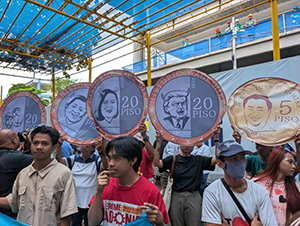
The already paltry ₱85 daily wage increase for workers in the National Capital Region (NCR) was effectively rolled back after a Pasig City court issued a temporary restraining order (TRO) halting its implementation, drawing strong condemnation from workers’ groups.
On July 30, the Pasig Regional Trial Court Branch 152 issued the TRO against NCR Wage Order No. 27, favoring a petition filed by two construction companies. The decision came after officials of the Marcos administration had touted the wage increase as “historic.”
“It’s already just a pittance compared to what they are demanding, and now even that is being rolled back,” Kabataan party-list Rep. Renee Co said.
ACT party-list Rep. Antonio Tinio said the suspension further aggravated workers’ hardships and highlighted the need for a genuine legislative wage increase.
Workers’ groups protested outside the Pasig RTC on August 3, denouncing the court action. They also held a separate protest at the Department of Labor and Employment (DOLE) office in Intramuros, Manila, condemning what they described as the department’s inaction and empty promises. Workers noted that this was the first time a wage increase mandated by a regional wage board had been challenged in court, raising fears that other companies could resort to similar legal actions to block future wage increases.
The controversy has intensified broader labor mobilizations across the country. Workers are demanding a living wage, which stood at ₱1,301 per day nationwide in July.
In Laguna, more than 800 workers of San Miguel Integrated Logistics Services Inc. went on strike against mass dismissals. In Cavite, workers of YYD System Interiors Inc. protested job losses and the non-remittance of mandatory benefits. Workers in Zambales demanded substantial wage increases and additional benefits, while in Caraga, union leaders at Adnama Mining Resources Inc. reported harassment allegedly involving soldiers.
For workers, the ₱85 increase is not only insufficient—it is now being denied altogether. They maintain that only sustained collective action can win meaningful wage increases, benefits, and decent working conditions.