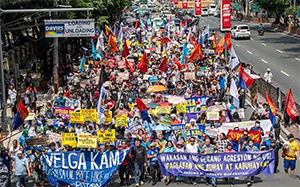
Mass actions across the Philippines, including a transport strike on March 19 and 20 and a general strike last March 26 and 27, highlight the Filipino people’s growing against US-led war in Iran and its impacts on Filipino workers and communities.
Transport groups, labor unions, and progressive organizations mobilized nationwide, with jeepney drivers, workers, and students staging coordinated protests in major urban centers in recent weeks. The actions disrupted transport services and drew attention to both domestic economic grievances and Marcos Jr.’s subservience to the United States.
With the ongoing war in West Asia driving up global oil prices, transport workers have been among the hardest hit, facing soaring fuel costs without corresponding increases in fares.
“For drivers, every increase in oil prices means less income for our families,” one organizer said, linking the crisis directly to the war. “But beyond that, we are also opposing the Philippines being used as a base for imperialist wars.”
Groups pointed to the country’s long-standing military agreements with the US, including expanded access to bases under security cooperation deals and the Enhanced Defense Cooperation Agreement (EDCA), as evidence of its role in supporting US strategy in the region. Activists argue that this alignment exposes the Philippines to economic and security risks.
Transport workers and commuter groups launched a nationwide strike on March 26, with protests centered along Aurora Boulevard in Quezon City. The mobilization, led by the No To Oil Price Hike Coalition and spearheaded by the transport group PISTON, drew drivers, commuters, and student groups demanding urgent government action to address soaring fuel prices.
Protesters called for fuel prices to be reduced to 55 pesos per liter, the removal of Value Added Tax and excise taxes on petroleum, and the repeal of the Oil Deregulation Law, which they say has enabled unchecked price increases.
With diesel prices reportedly reaching as high as 120 pesos per liter in the National Capital Region, transport leaders said existing subsidies and cash assistance are insufficient. Mody Floranda of PISTON warned that these measures last drivers barely a day.