Vol. VIII, No. 17 - September 15, 2026
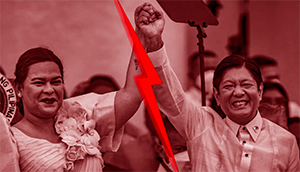
In the Philippines, the conflict between the two dominant political factions of Marcos and Duterte has been escalating in an unprecedented crescendo. The regime’s president Fernando Marcos Jr and vice president Sara Duterte are tightening their hold in each other’s throat, goaded and aided by their respective band of supporters. In the meantime, the Filipino people, increasingly suffering from rising cost of living, lack of jobs, failed agriculture due to feudal practices and natural calamities and violations of their political and human rights, are getting organized and fight for a systemic change to a more equitable and just society.
Less than five years ago, Marcos Jr and Sara Duterte campaigned together in a “UniTeam” coalition in the reactionary elections to overwhelm other opponents. This unity, however, did not last long. Sara was furious when Marcos refused her demand to be named secretary of defense and only gave her the education portfolio. She and her cohorts began a widespread and relentless campaign against Marcos, branding the latter as corrupt and a drug addict, even demanding him to step down.
Sara and her clan were weakened by the imprisonment in the ICC jail of her father, the former president Rodrigo Duterte, charged for crimes against humanity in his “war on drugs”. Sara herself is now in the throes of impeachment proceedings, accused of bribery, misuse of confidential funds, unexplained wealth and death threats against Marcos, his wife and cousin, a former speaker of the House of Representatives Martin Romualdez. The Senate, after a series of nearly comical events staged by rival sections loyal to the two factions, incidents derided even by the international community, barely gathered itself together and convened as an impeachment court. Sara, in addition, has been charged in a regular court for three counts of the crime of grave threats.
Marcos himself is in hot waters, or more precisely, up to his neck in the accusations of massive corruption involving hundreds of billion of pesos in flood control and other infra-structure projects. He had to make escape goats of his cousin Romualdez and high government officials including those in his cabinet, in the vain hope of deflecting charges accountability. People also view the imprisonment of some officials and contractors as just the tip of the of the iceberg in the corruption in the government machinery.
Meanwhile, the Filipino people are suffering heavily from rapidly rising cost of living brought about by the increasing corruption in the ruling class and exacerbated by external factors like the aggression in West Asia by US imperialism and its cohorts. The masses, especially those in the countryside, are subjected to the most hideous violations of their human rights in the militarization of vast areas often in the assistance to foreign companies in mining operations and other destructive exploitation of natural resources. The infamous massacre of 19 people in Toboso including youth from abroad is just one of these atrocities perpetuated by the murderous regime.
The various forms of people’s movements in the urban centers are increasing and the revolutionary armed forces in the countryside are rapidly growing. At the same time, the conflict among the factions of the ruling class is intensifying.
These liken the events that took place five and a half decades ago, on the eve of the enforcement of the infamous Martial Law by the dictator Ferdinand Marcos Sr, father of the present president, on September 21, 1972. The people must not let this happen again. But if the present Marcos regime contemplates a similar move, he should remember the lessons of history. The people’s revolutionary movement grew exponentially under the harshest suppression by his father’s dictatorship rule. Oppression breeds resistance.