Vol. VIII, No. 09 - May 15, 2026
The impeachment proceedings against Vice President Sara Duterte now unfolding before the Philippine Senate have further exposed the deepening crisis of the country’s ruling political system. What the Filipino people are witnessing is a full-blown political circus driven by rival factions of the Duterte and Marcos ruling classes desperately maneuvering to preserve power and position themselves for the 2028 presidential elections.
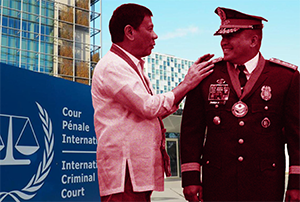
The Duterte camp, despite suffering many setbacks, and gradually losing ground in parts of their stronghold Mindanao, continues to exercise considerable influence over sections of the military, police, local dynasties, and reactionary political networks nationwide. Their actions to replace the Senate President has also allowed them to consolidate a pro-Duterte majority in the senate which is set to hold an impeachment trial against her. Facing increasing isolation from the Marcos clique and mounting legal and political pressure with the looming ICC arrest warrant against Senator Ronaldo “Bato” dela Rosa, the Dutertes are now fighting to preserve their political machinery and maintain relevance in the shifting balance of ruling class power.
The entire spectacle unfolding in the Senate demonstrates the rotten character of the semicolonial and semifeudal political system in the Philippines. State institutions are repeatedly weaponized and abused not to serve the interests of the Filipino people, but to settle disputes among political dynasties and rival factions of the big comprador bourgeoisie and landlord classes. The masses are expected to watch passively while competing powers claw at one another for access to state power, patronage, and wealth.
Meanwhile, the Filipino people continue to sink deeper into economic hardship.
The prices of basic commodities continue to soar. Rice prices surged 13.7% in April while overall food inflation accelerated sharply to 6.1% in the same period. Electricity rates and fuel prices remain punishing for workers and poor households already struggling to survive. Wages remain grossly insufficient while unemployment and precarious labor continue to plague millions. Overseas migration remains one of the few options for survival for countless Filipino families forced to endure separation and insecurity due to the absence of genuine national development.
In the countryside, the crisis is even more severe. Landlessness remains one of the most fundamental problems confronting the peasantry. Land grabbing by landlords, mining corporations, plantations, and real estate interests continues unabated, often backed by militarization and state repression. Peasant communities resisting displacement are harassed, arrested, and attacked while the government protects the interests of large landlords and foreign capital.
Yet despite these worsening conditions, the ruling factions remain consumed by endless political maneuvering and self-serving power struggles.
The Marcos and Duterte camps may be bitter rivals today, but they both represent factions of the same rotten ruling order dominated by big landlords, big comprador bourgeoisie, and bureaucrat capitalists who all serve the interests of their imperialist masters. Their conflict is not over how to solve poverty, landlessness, unemployment, or foreign domination. Rather, it is a struggle over who will dominate the state machinery and control the enormous resources currently wielded by the reactionary puppet government.
The Filipino people cannot place their hopes in one reactionary faction against another. Neither the Marcos nor the Duterte camp offers any genuine solution to the roots of the armed conflict. Regardless of who secures dominance in the 2028 presidential elections, the fundamental structures of exploitation and oppression will remain intact so long as the semicolonial and semifeudal system persists.
The present political circus only demonstrates even more clearly the necessity of waging the national democratic revolution.
Only through revolutionary struggle can the Filipino people establish a government that genuinely serves workers, peasants, fisherfolk, indigenous peoples, migrants, youth, and all oppressed sectors of society. Only through revolution can genuine land reform and national industrialization be achieved. Only through revolution can the economy be liberated from imperialist domination. Only through revolution can the resources of the country be directed toward healthcare, education, housing, food production, and social welfare rather than corruption, militarization, and political patronage.
The crisis now unfolding in the Senate presents an opportunity to deepen the people’s understanding that the problem is systemic. The rot lies not simply in individual politicians but in the entire reactionary state that perpetuates dynastic rule, foreign domination, bureaucrat capitalism, and feudal exploitation. As the ruling factions intensify their struggle for Malacañang ahead of 2028, the fighting Filipino masses must intensify their own struggle for genuine democracy, national liberation, and social justice as part of the overall advance of the national democratic revolution.