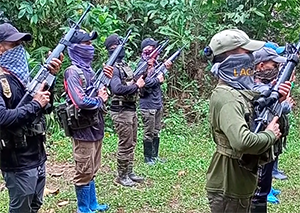
Protests have erupted in response to the Toboso massacre, where 19 people, including two Americans, were killed by the Philippine military during a counter-insurgency operation. Human rights organizations and activists are demanding an independent investigation and accountability for the violence against civilians.
Filipino American activists and human rights groups have condemned the military's actions, calling for an independent investigation into the incident. Reports indicate that 10 of the deceased were members of the New People's Army (NPA) while 9 were civilians, including student leaders and journalists and minors. KARAPATAN have described the killings as a violation of international humanitarian law, emphasizing the need for accountability.
On May 5, protest were launched in Filipino communities demanding justice for the massacre victims in the United States. These activities and other similar rallies in other parts of the world were led by the Bagong Alyansang Makabayan–International and the International Coalition for Human Rights in the Philippines.
The recent initial findings on the victims of the Toboso massacre of Dr. Raquel Fortun, a reknowned forensics pathologist and Chairperson of the Department of Pathology at the University of the Philippines (UP) Manila College of Medicine, indicate that many bodies were poorly handled, with some showing gunshot wounds to the back, raising questions about the military's claims of an armed encounter. Additionally, there were issues with misidentified bodies and missing clothing, complicating the investigation into the incident.
Meanwhile, the New People’s Army (NPA)-Northern Negros (Roselyn Jean Pelle Command) declared its readiness and determination to continue the people’s war to achieve justice for those massacred in Toboso.
NPA-Northern Negros spokesperson Ka Cecil Estrella said the martyrs played a crucial role. As Red fighters of the people’s army, they directly joined peasants in production, held discussions on the rights of the exploited, and provided social services to Negrense communities.
Estrella said the martyrs’ death weighs as heavy as Mount Kanlaon and their legacy lives on in every drop of tear, sweat, and blood flowing from the masses.
As the Communist Party of the Philippines Northern Negros Committee’s main instrument in advancing the people’s war, the NPA unit helped expand and strengthen mass bases and Party branches. In the committee’s December 2025 report, Party membership grew 30% that year and new branches were formed in broad areas. Membership in secret mass organizations grew nearly 50% while the number of individuals reached by the revolution tripled.
NPA-Northern Negros also doubled the range of its area of operations and launched at least 19 guerrilla offensive and counter-offensive actions. It conducted these operations up to towns near the provincial capital and populated areas.
“As the global crisis worsens, the people face ever more dire conditions where their only choice is to take up revolutionary violence to defend themselves and their fellow,” Estrella said. She said this is also why the NPA, founded in Tarlac in 1969, took root and expanded nationwide to Negros Island, and persists and thrives.
“Reactionary forces have tried for 57 years to crush the armed resistance but failed to uproot it. Fascist soldiers and their masters can never grasp that the people’s war will surely advance as long as masses remain mired in poverty,” Estrella declared.
In a related development, according to Armando Sumayang Jr Command (ASJC-NPA), the 47th IB suffered 2 casualties in a counter-offensive action of the NPA in an encounters in Barangay Masaling, Cauayan in the Southwest portion of the Negros Island on May 4. No casualty was suffered by the NPA in this encounter.#